

Apple is right: 1080p is all we need for smartphone screens - summersharind
I have seen the deficient. Or more than specifically, I have seen the brightness, contrast, and pixel density.
After weeks of testing, I'm ready to declare the iPhone 12's Full HD (1920×1080, or 1080p) screen just as good as the Note 20 Ultra's WQHD (2560×1440) one, if not better. Android phone makers have convinced us that we need 2K Oregon high screens to get the best wake experience, but that's just not the case.
I don't wishing to make this about Apple vs Android, simply the fact of the matter is, we ne'er needed displays with WQHD+ resolution. We simply wanted them–or preferably, headphone makers positive us that we wanted them. Full HD displays have get over relegated to budget Mechanical man phones equally more accent is placed happening immersive, edge-to-edge, pixel-packed experiences. You need appear no further than DisplayMate's iPhone 12 Pro Max OLED Display Shoot-Out to see how wrong that thinking is: The iPhone 12's Full HD display received the highest-ever A+ display carrying out grade.
 Christopher Hebert/IDG
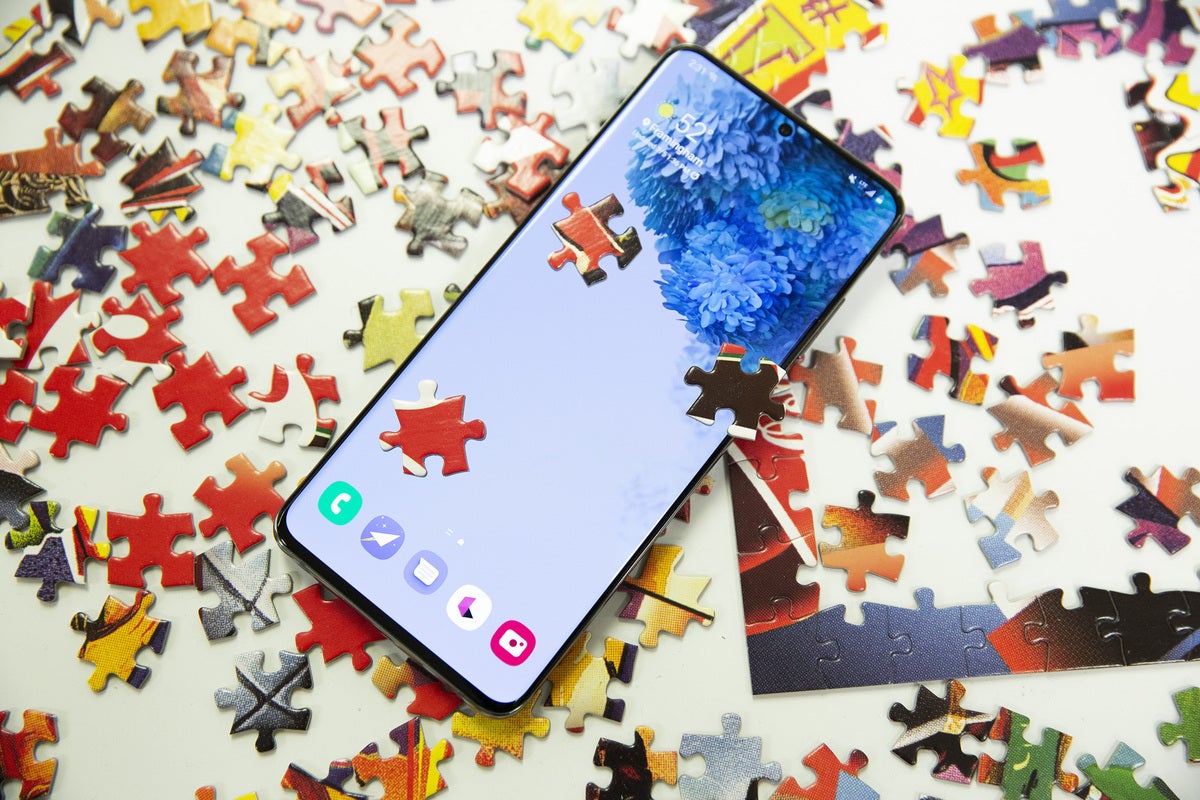
 The Galax urceolata S20 Ultra's concealment is just as gorgeous at 1080p as it is at 1440p.
But all those extra pixels just aren't necessary. Case in point: Samsung ships with its QuadHD+ resolution turned off by default on. I'm willing to bet many hoi polloi who buy peerless don't even know how to turn it on. Super-pinched-resolution displays are nice on spec sheets and in macro testing, but along a sextet-inch display, the results are basically insensible to the human eye. If the chaffer-dropping Infinity showing on the Galaxy S8 had maxed out at 1080p, no single would bear complained.
Android enthusiasts may claim they can tell the difference, but I incertitude they would be competent to piece a 1440p display out of a 1080p lineup. I should know; I was one of them. There was a time when the first thing I did when I got a new Samsung Galaxy phone sure testing was bump the resolution from 1080p to 1440p. I would have challenged anyone that my eyes could recount the difference.
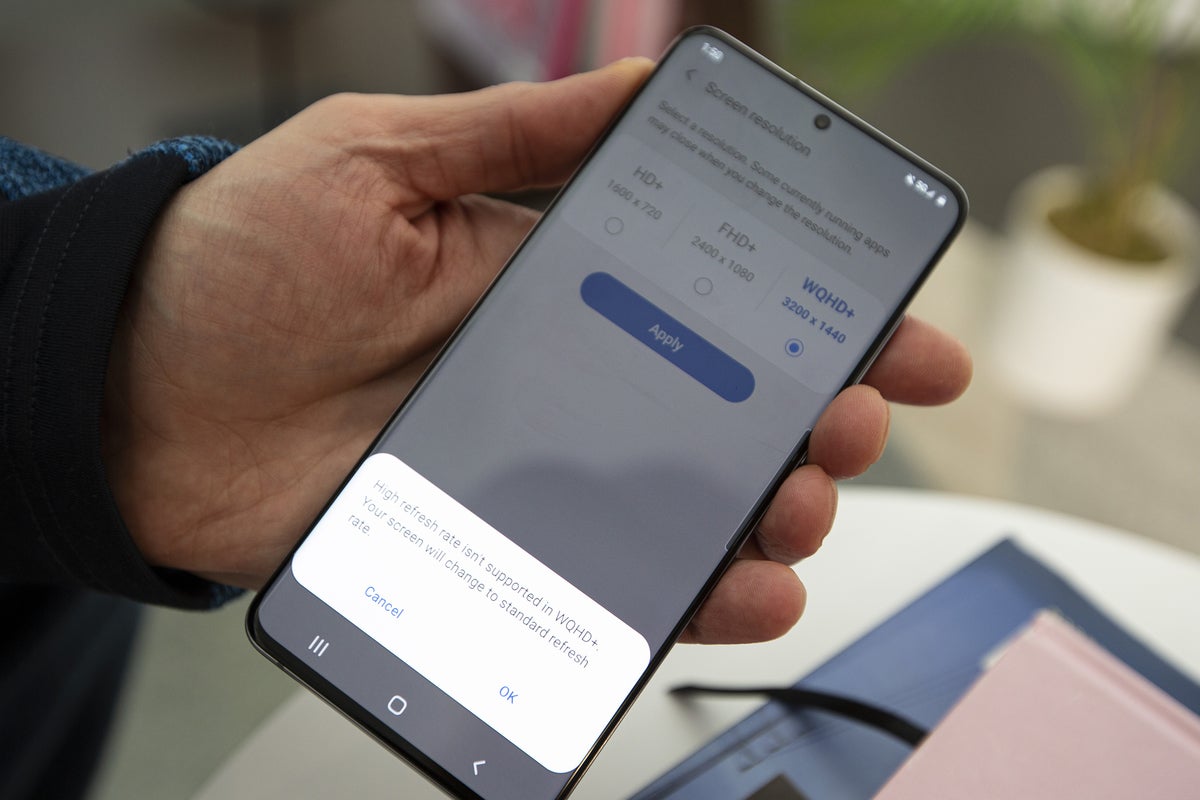
They terminate't. When Samsung launched its first earpiece with a 120Hz refresh rate in the first place this yr, I was among the reviewers who criticized it for non working with the higher-resolution setting. I was so convinced that WQHD+ was the superior setting that I questioned whether the 120Hz refresh value was worth downgrading to a let down resolution.
 Christopher Hebert/IDG
 if you want to utilization the 120Hz refresh rate on the S20 or Note 20, you'll need to keep goin the screen resolving power scurvy. And that's OK.
It is, and Samsung is smart to limit 120Hz to 1080p. Even without a fast brush up pace, 1080p screens provide 400-450 pixels per inch, well above what Apple's Steve Jobs called the "magic number right on or so 300 pixels per inch, that when you hold something around…10 to 12 inches by from your eyes, is the restrain of the human retina to differentiate the pixels."
Too many pixels
For a while in that location, it looked like phone companies were active to start competing in the 4K space, starting with the Sony Xperia 1, which had a whopping 3840×1644 resolution and 643ppi pel density. While Sony has continuing to Trotskyite out ridiculously high-reticuloendothelial system screens–with a reported 5K, 900ppi model in the works—overly high-res screens harbour't really caught on.
That's a good thing. Piece 2K, 3K, and 4K are great for spec sheets and marketing copy, the extra pixels are, for the almost share, unnecessary and even detrimental to the boilersuit experience. High-resolution displays use of goods and services more battery, task GPUs, and on occasion, disrupt app layout and execution. They deliver few benefits beyond the perception that images and fonts look crisper. In short, 4K is nifty on a TV, but wholly unnecessary on a phone.
 Michael Simon/IDG
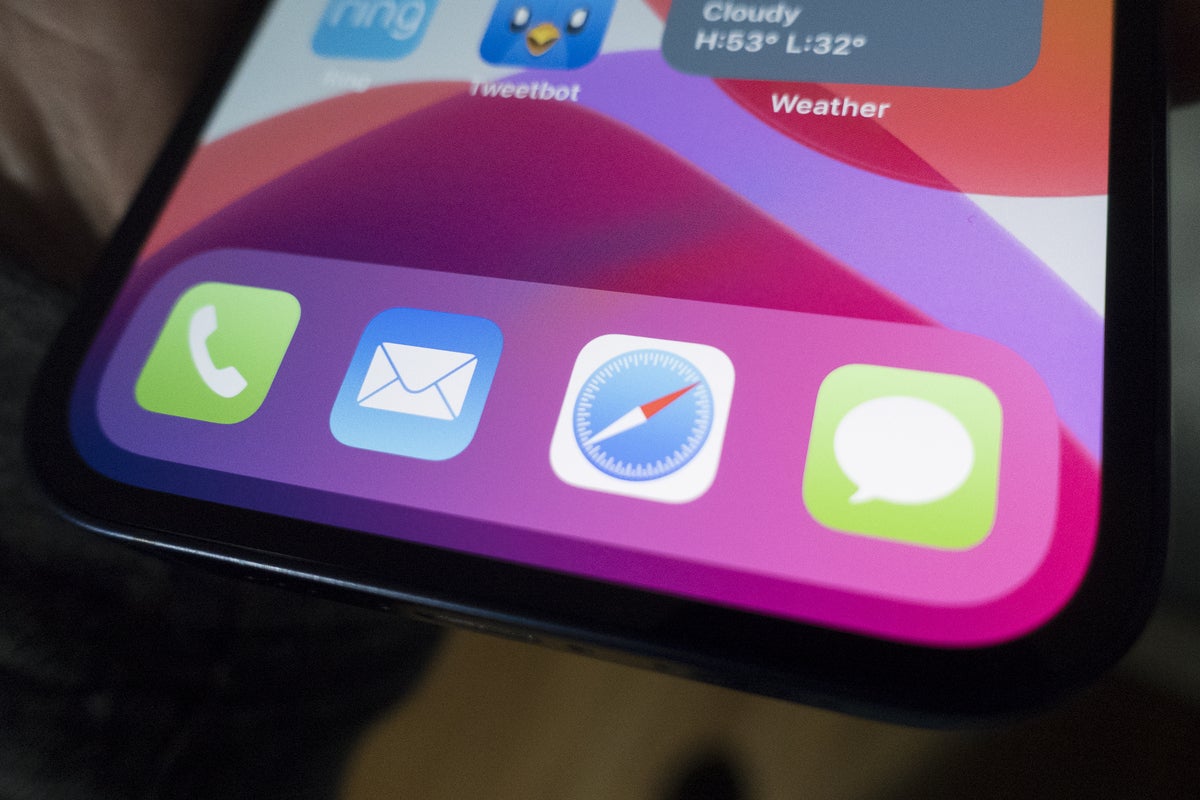
 The iPhone 12 maxes out at 1080p, but you'd never know it by looking at information technology.
The Same goes for 2K and 3K. On paper, Apple's iPhone 12 displays are pedestrian compared to those on near premium Android phones. But specs don't tell the story. Apple takes such care with the calibration of its displays to make them visually indistinguishable from the excellent WQHD displays on Galaxy phones and luminance old age better than Google's 1440p Picture element phones. Now that Apple has finally bypast full-OLED with its iPhone batting order, thither's rattling little left to criticize, obscure from the lack of a 120Hz option. Rumors suggest that will come next twelvemonth, which will put the iPhone on a par with Samsung's best, justified with significantly lower resolution.
Orchard apple tree cares to a greater extent about display character than pixel quantity, and it's willing to takings a bit to its competitors to get there. In doing so it's proved that we don't actually need resolution bettor than 1080p. I'm hoping past phone makers wish stop trying so solid and follow Apple's example instead.
Update 3:45 pm: Added a reference to DisplayMate's iPhone 12 Pro Max testing.
Source: https://www.pcworld.com/article/393738/sorry-android-fans-apple-is-right-1080p-is-all-we-need-for-smartphone-screens.html
Posted by: summersharind.blogspot.com
0 Response to "Apple is right: 1080p is all we need for smartphone screens - summersharind"
Post a Comment